PackFresh
We build software for people who collect, play, trade, and sell.
One catalog of nearly a million cards, powering your collection, your decks, the hunt for what you are missing, and a shop’s inventory across every channel it sells on. Eight tools on one engine, so nothing has to be entered twice.
Trading cards are where we started and where the catalog is deepest. The systems underneath were built for collectibles generally, and that is the direction we are going.
- Cards cataloged
- 994,672
- Printings and variants
- 3,151,204
- Games live
- 352 of 1,112
Catalog size as of 11 September 2026. This is the scale of the platform, not a count of customers.
Made for the hobby
Your collection should feel like a collection
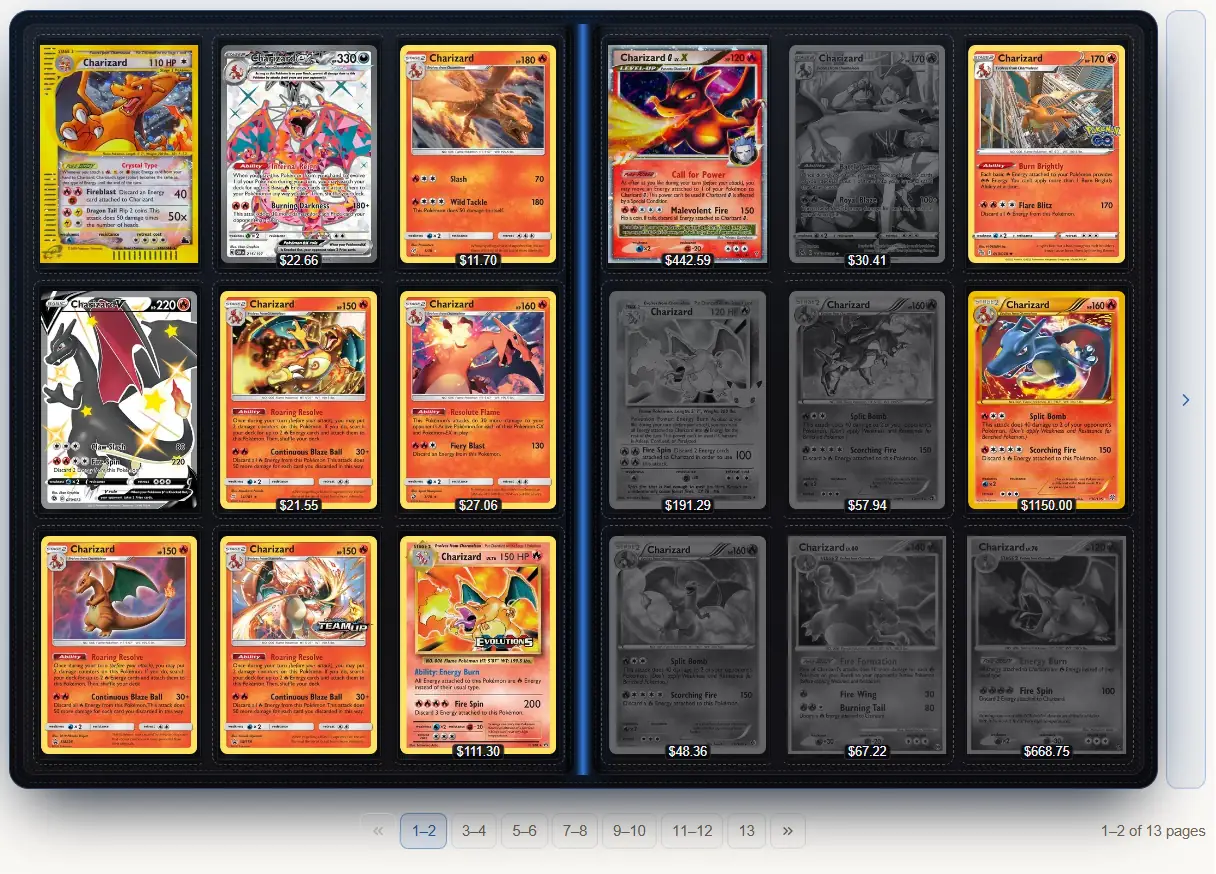
Not a spreadsheet with a total at the bottom. A binder you can turn the pages of, with the cards you own in full color and the ones you are still chasing sitting there in grey, waiting.
Collect
Build a binder around a set, an artist, a Pokémon, or whatever you actually collect. It fills in from the cards you own, values them as it goes, and shows you the gaps without you counting. The same cards are what the marketplace prices and what Scout goes hunting for, because they are the same records, not a copy.
Play
Most people own the cards because they play with them. NetDeck is a deck builder with nearly a million decks in it, and it reads the same collection, so a deck can tell you what you already have and what you are short. Help with rules questions and deck analysis is built and being tested; it is not open yet.
What we build
Eight tools, one engine
Start with the one you need. They run on the same catalog, the same record of what you own and the same prices, so the others already know when you get there.
- PackFreshbuildingCollect, play, buy and sell, without keeping a second copy of what you own.For collectors, players and shops
- PackFresh RipsbuildingOpen packs online and keep, sell or ship whatever you pull.For collectors
- PackFresh ProbuildingRun your shop without reconciling five systems every Sunday.For shops
- PackFresh ScoutbetaTell it what you are hunting and let it watch every shop for you.For collectors and shops
- PackFresh LensbetaPoint a camera at a pile of cards and get priced inventory back.For collectors and shops
- PackFresh PlatformbuildingBuild on the same interfaces our own products use.For developers and partners
- NetDeckbuildingBuild a deck in any game, then go find the cards it needs.For players and collectors
- OrganizedPlayliveRun tournament night without a laptop full of spreadsheets.For organizers, shops and players
How they fit together
The same card, all the way through
Each product has its own job and its own app. What none of them has is a separate copy of your collection, so using one means the others already know.
- You build a deck in NetDeckand four cards are missing.
- Scout goes looking for themacross retail and the marketplace, and tells you the moment one hits your price.
- You buy one on PackFreshfrom a seller whose track record you can actually see.
- It lands in your collectionwithout you typing it in, and your deck stops asking for it.
- That sale sharpens the priceeveryone sees on that card tomorrow.
None of that works if each product keeps its own idea of what a card is, who owns it and what it is worth. So they do not. The systems underneath →
For shops
Sell it once, everywhere
A card sells at the counter
Your stock drops by one, once. The listing comes off Shopify and eBay, the marketplace updates, and nobody buys a card you already sold. Most shops reconcile that by hand on a Sunday. That is the afternoon we are trying to give back.
A collection comes in to be priced
Run it past Lens instead of typing it. It reads the cards, tells you what they are worth right now, and drops them into your inventory ready to list.
Somebody wants what you are sitting on
Want lists and buy lists make demand something you can look at rather than guess at. When a customer is hunting a card in your case, that should not come down to luck.
Built from inside the hobby
Who is building this
I have spent 26 years in games: building them, then building the software underneath the places they get bought, sold and argued about, most recently as Head of Technology at TCGplayer. I have been collecting the whole time. PackFresh is the set of things I kept wishing existed.
Tony BurianFounder, PackFresh
PackFresh is founder-led. The spread of products is not a portfolio strategy; it is one person hitting the same problem as a collector, a player, an engineer and a marketplace operator, and eventually building the one thing underneath all four.
Working with us
If any of this is for you
Every one of these reaches a person, not a queue. We would rather answer the wrong mailbox than have you not write.
- Partner with usRun a shop, make content, or source inventory. Four programs, each at a different stage of readiness.
- Build on the platformThe same catalog, inventory and pricing contracts our own products run on.
- Come work on itFounder-led and early, so the work you do would show. One role open right now.
- Talk to usPress, investment, or something that does not fit the other three.